Handgun Training in Minnesota
Find a thoughtful next step, from safe handgun handling and permit fundamentals to more purposeful pistol skill-building.
Choose training that fits the work in front of you.
Handgun training should make your next decision clearer. Whether you are new to pistols, preparing for a Minnesota Permit to Carry, or ready to improve the quality of your practice, the right starting point is an honest look at your experience and goal.
Tactical Training Solutions helps Minnesota students build from the right foundation. For some, that means safe handling, range expectations, and a permit course that explains the responsibilities behind carrying. For others, it means moving beyond an introductory certificate and developing more reliable pistol mechanics, accountable accuracy, and a practice routine with a real purpose.
Those paths are connected, but they are not interchangeable. A newer student deserves patient instruction that makes a first range experience less intimidating. A shooter with a sound safety foundation deserves coaching that identifies what is limiting progress, instead of being sent back through material they have already mastered. Starting at the right level respects both your time and the responsibility that comes with a handgun.
That is also why the first conversation matters. The best recommendation comes from more than a course title. It considers whether you have handled a handgun before, what kind of range time you have had, whether a permit is part of your goal, and what would make you feel prepared rather than rushed. A clear answer at that point can save you from buying gear, arranging a day, or choosing a class before the foundation is in place. You leave with a plan you can follow after the class, not just a certificate or a list of drills.

Find the training path that matches your experience.
Good handgun instruction gives you a useful standard today and a sensible next step for tomorrow.
Safe handling for newer students
For a newer handgun owner, confidence should grow from safe habits, not from rushing toward a more demanding course title. That begins with learning how to handle a pistol deliberately, how to follow range procedures, how to think about storage and loading, and when to slow down and ask a question. Those fundamentals are useful long before a person decides whether a permit is part of their plan.
The Minnesota Permit to Carry course is often a helpful foundation because it combines safety, pistol fundamentals, legal responsibilities, and the certificate path in one clear sequence. The classroom portion is available online, giving students time to absorb the material and prepare questions. The hands-on portion includes an in-person review and live-fire qualification when that service is available again.
Build a clear safety foundation before you worry about speed, advanced drills, or equipment you are not ready to use.
Practical pistol skill-building
Once safe handling is dependable, structured handgun training can make ordinary range time more productive. Shooters often know that their accuracy, draw, recoil management, or consistency needs work, but do not have a reliable way to identify why. A focused course gives those problems a clearer shape: observe what the pistol is doing, understand the mechanical habit behind the result, make one deliberate adjustment, and test whether it holds up.
That approach keeps training connected to a standard. Faster shooting is not automatically better shooting. A useful drill asks whether the hits are accountable, whether the shooter saw what was needed, and whether the gun was handled safely from start to finish. Tactical Training Solutions approaches pistolcraft as a progression, so students can improve one layer at a time rather than collecting disconnected drills.
Use coaching and a clear standard to turn a stubborn range problem into a specific next practice focus.
Training for a mixed-experience group
Friends, family members, and clubs often arrive with different levels of experience. A useful group plan does not force the newest person to keep pace with the most experienced one, and it does not assume everyone needs the same course. Sharing the group's goals, previous range experience, and practical concerns early helps determine whether a safety-first foundation, permit path, or future advanced work makes the most sense.
A direct conversation also protects everyone from planning around old information. Current dates, qualification availability, equipment expectations, and prerequisites can change. Before buying ammunition, arranging travel, or assuming a particular course will be offered, check with TTS about what is currently available and what preparation would be useful.
Start with the group's actual experience and goals, then confirm the current options before anyone commits time or money.
Learn with an educator who keeps the details grounded.
Useful handgun training is calm, direct, and specific about what comes next.
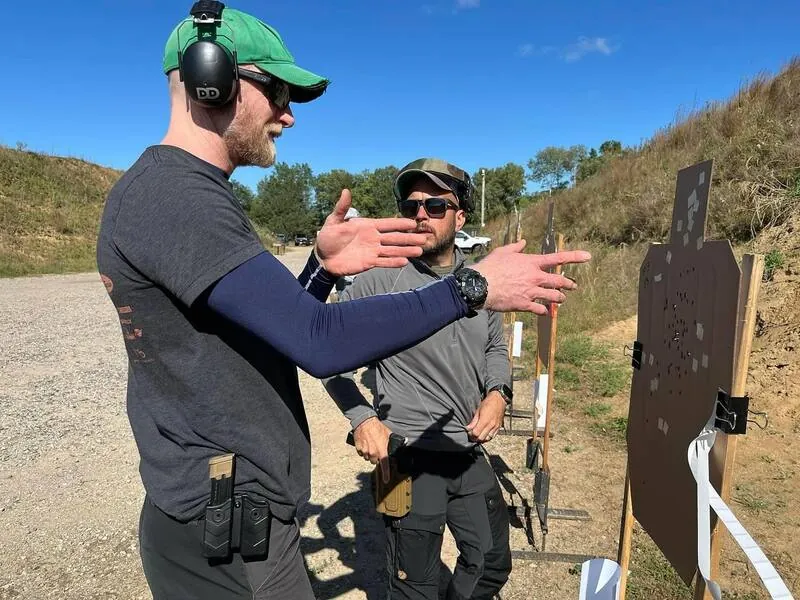
Tactical Training Solutions is led by Craig Burris, a Minnesota Permit to Carry instructor since 2005. His background includes Air Force training, law-enforcement experience, self-defense instruction, instructor certification, and ongoing pistol and rifle development. That experience supports a simple teaching standard: meet the student where they are, identify the next useful correction, and avoid turning serious skills into theatre.
For a new student, that can mean taking time to understand safe handling and the permit process. For an experienced shooter, it can mean separating a fundamental issue from a more advanced skill goal. In either case, the purpose is the same: leave with better information, better habits, and a training plan that is realistic for your current level.
- Minnesota Permit to Carry instructor since 2005.
- Background in training, education, law enforcement, and self-defense instruction.
- A progression from permit fundamentals into more demanding pistol and carbine work.
Bring the details that lead to a better recommendation.
You do not need to know exactly which class to take before you reach out. A few useful details are enough to start a more productive conversation.
Think about your recent experience with handguns, what you hope to improve, and what equipment you already use. A new student may want to ask about a first range day or loaner availability. A more experienced shooter may want to talk about holster work, practice goals, prerequisites, or whether a future course is the right level. Being straightforward about the starting point makes it easier to recommend training that fits.
Then confirm current availability. Qualifications are temporarily suspended until November, and advanced class dates are not currently listed for 2026. Reaching out before spending money or making travel plans keeps the decision based on current information, not an outdated course listing.
Share your experience level, training goal, equipment questions, and any timing concerns. TTS can help you clarify the right next step before you commit.
Answers before you choose a class.
What handgun training is right for a beginner?
Is handgun training the same as a Permit to Carry course?
Do I need to own a handgun before training?
Are handgun classes currently scheduled?
Ready to start?
Start the classroom portion online, then contact TTS to finish your qualification locally.