Defensive Handgun Training in Minnesota
Build more reliable pistol mechanics, accountable accuracy, and a clearer practice plan after the fundamentals are in place.
Turn range time into useful feedback.
Defensive handgun training gives experienced, safety-conscious shooters a structured place to improve the skills that matter after an introductory course: how the pistol presents, how the sights return, how recoil is managed, and how accuracy holds up when the task becomes more demanding.
A Minnesota Permit to Carry course establishes an important foundation. It covers safe handling, legal responsibilities, and the live-fire qualification required for a certificate. Defensive handgun training has a different job. It helps shooters identify the habits that limit performance, work through them with a clear standard, and leave with a practice plan that is more productive than repeating the same casual range routine.
Tactical Training Solutions approaches this work as a progression. The goal is not to chase speed for its own sake or turn a training day into a performance. The goal is to build repeatable mechanics, make deliberate decisions, and keep every improvement tied to safe handgun handling and accountable hits.

What defensive handgun training develops.
Build the skills that give each practice session a purpose and each drill a clear standard.
Reliable fundamentals under a higher standard
Strong handgun performance starts before the shot breaks. Stance, grip, visual focus, trigger control, and recoil management all affect whether the pistol behaves predictably from one repetition to the next. Defensive handgun training breaks those connected skills into useful coaching points, so students can understand where an error begins instead of simply seeing an inaccurate target at the end.
That kind of diagnosis is valuable for a shooter who feels stuck. More ammunition does not always produce more progress. A rushed presentation, inconsistent grip pressure, missed visual information, or a trigger press that changes under pressure can each hold back accuracy. Clear feedback gives the student something specific to work on, then a way to check whether the adjustment is actually helping.
Work on the details that make the pistol more predictable before adding more speed, movement, or complexity.
Accuracy that stays connected to the task
Defensive shooting is not about firing as quickly as possible. It is about seeing what the pistol is doing, applying the right amount of speed for the target and distance, and keeping hits accountable. Structured drills can help students recognize when they have enough sight information to act and when slowing down is the responsible choice.
As pace increases, recoil recovery and visual discipline matter more. Students learn to notice whether the pistol is returning consistently, whether the sight picture is usable, and whether the next shot is being pressed with intention. Those skills make practice more honest. Instead of calling a fast string successful because it felt fast, the shooter can evaluate whether it met the standard.
Use a clear target standard to decide when to press the pace and when a more deliberate shot is the better choice.
Practical handling skills, taught as a progression
Drawing from a holster, reloading, clearing a malfunction, shooting one-handed, moving safely, and working from concealment all build on the same foundation. They should be introduced in an order that matches the student's current ability, not treated as a list of tricks to rush through. TTS training keeps the focus on control, sound decisions, and habits that can be repeated safely outside the class.
As the work becomes more demanding, students can add layers without losing the basics that keep training useful. A shooter who can already present the pistol safely and consistently may be ready to work on recoil, transitions, or more involved decision-making. A shooter who needs to reinforce grip or trigger control first gets a better return by addressing that foundation before moving on.
The most useful class is the one that matches your present skill, equipment, and training goal.
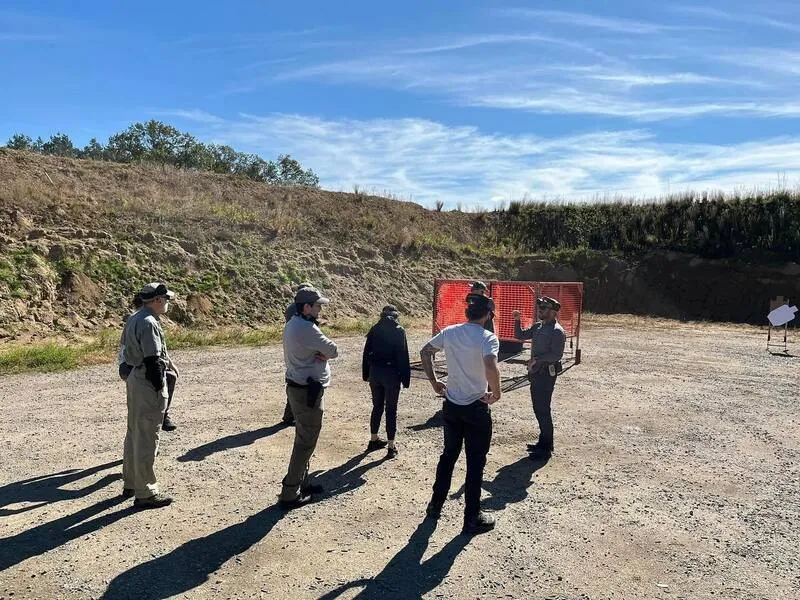
Get coaching that makes your next practice session better.
Tactical Training Solutions is led by Craig Burris, an experienced educator with a background in Air Force training, law enforcement, instructor certification, self-defense instruction, and ongoing pistol and rifle study.
That background supports a straightforward teaching approach: identify the skill that needs attention, explain why it matters, apply a standard, and give the student a next step they can use. The value is not a complicated vocabulary or a pile of drills. It is leaving with clearer feedback, better questions for your own practice, and a more realistic sense of the work that will move you forward.
- Minnesota Permit to Carry instructor since 2005.
- Ongoing training across pistol, rifle, low-light, trauma care, and instructor development.
- A practical course progression for shooters who are ready to build beyond the basics.
Choose a productive next step.
A brief conversation before you register can help place your time, equipment, and experience in the right course.
Be honest about where you are starting
Defensive handgun training is most useful for shooters who already take range safety seriously and want coaching beyond a basic introduction. You do not need to arrive as an expert, but you should be ready to follow direction, work deliberately, and accept feedback. If you are new to handguns or still need the Minnesota permit foundation, a safety-first permit course is usually the better place to start.
Think about what you want to improve before you reach out. A shooter who wants steadier accuracy, a more consistent draw, better recoil control, or a clearer way to structure practice has a useful starting point for the conversation. Sharing that goal, along with your recent range experience and the gear you use, helps TTS point you toward a future class that is challenging without asking you to skip the work that should come first.
Start with the Minnesota Permit to Carry course for safe handling, legal responsibilities, and the required qualification path.
Confirm the details before you make plans
Advanced class dates, locations, round counts, prerequisites, and equipment lists can change. TTS is not listing advanced class dates for 2026, so contact the instructor before making travel, ammunition, or gear plans. That conversation can confirm whether a future offering fits your experience and what you should prepare when the right class becomes available.
A reliable 9mm or larger handgun, magazines, a practical holster, magazine pouch, eye and ear protection, and ammunition are common requirements. Confirm before registering.
Before you plan your next class.
Who is defensive handgun training for?
Is this the same as a Minnesota Permit to Carry course?
Do I need prior shooting experience?
What equipment should I expect to bring?
Are defensive handgun classes currently scheduled?
Ready to start?
Start the classroom portion online, then contact TTS to finish your qualification locally.