Carbine Training in Minnesota
Build safer handling, cleaner mechanics, and more purposeful carbine practice with a training path that matches your experience.
Give your carbine practice a clear purpose.
A carbine is only as useful as the habits behind it. Structured instruction gives responsible shooters a place to improve the mechanics, decisions, and standards that ordinary range time can leave unexplored.
Tactical Training Solutions approaches carbine work as a progression, not a performance. The goal is to build reliable handling first, then add useful skills one layer at a time. That can include a more consistent mount, a dependable zero, efficient reloads, thoughtful malfunction response, stable shooting positions, and accountable hits. Each skill should support the next rather than become a trick learned in isolation.
This is a better fit for a shooter who wants feedback, not just another day of firing rounds. A good training day shows where a process breaks down, gives you a way to correct it, and leaves you with a practice priority you can carry into the next session. That makes time, ammunition, and effort count for more.
What practical carbine training develops.
Build the habits that make a rifle easier to run safely, deliberately, and consistently.
A reliable foundation before more demanding work
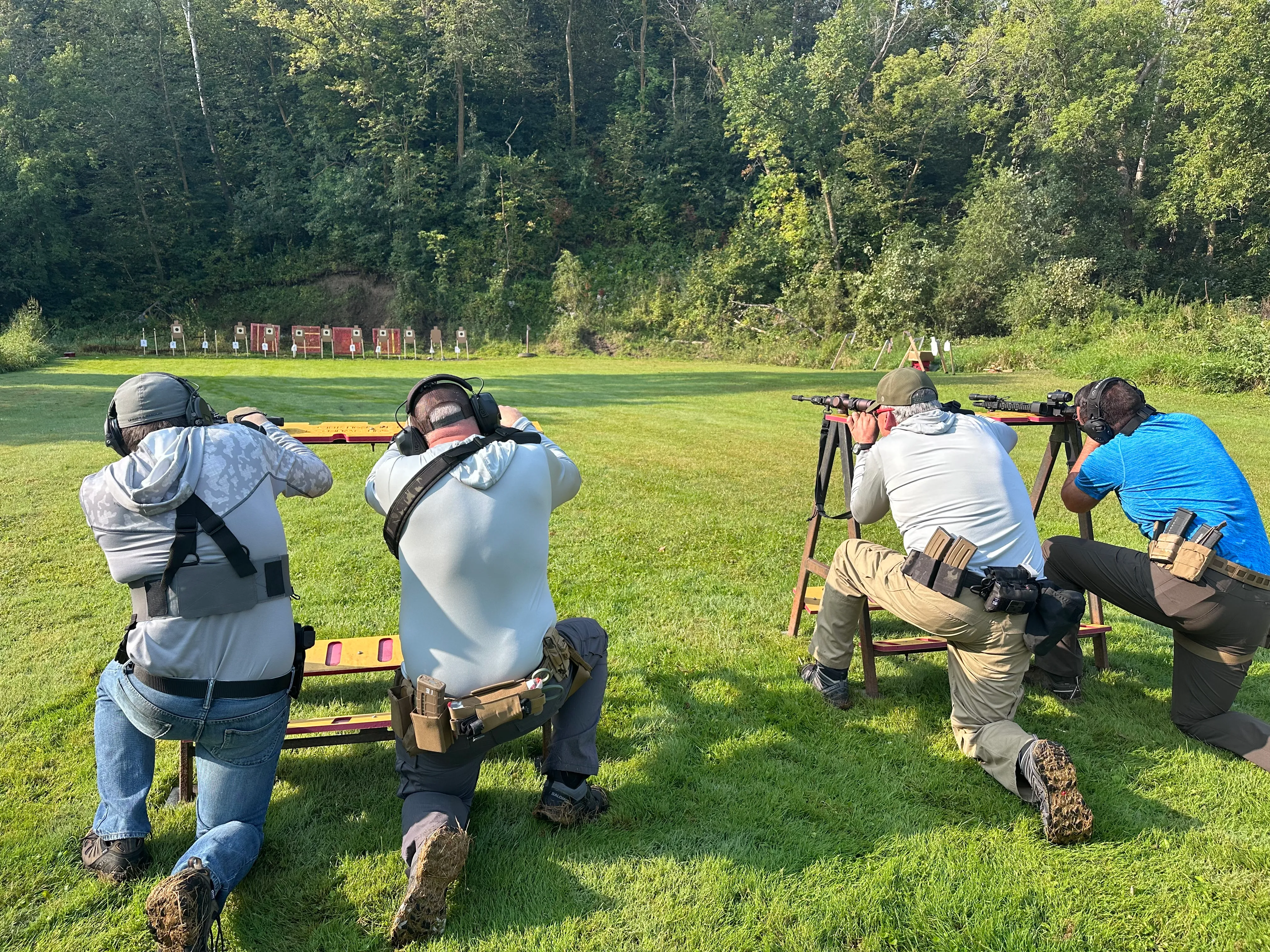
Useful carbine skill starts with a setup that is understood and handled responsibly. Students may work on safely mounting the rifle, establishing a stable shooting position, confirming a practical zero, managing the sling, and building a repeatable process for loading and unloading. These fundamentals sound simple because they are meant to be repeatable. Under more demanding conditions, that repeatability is what keeps the work organized.
The point is not to rush through the basics so the day can look more advanced. A shooter who can establish a stable position, manage the trigger deliberately, and understand what the sights are showing has a sounder platform for every later skill. TTS training keeps that foundation visible as the work becomes more involved.
Start with safe, repeatable mechanics before adding speed, movement, or a more complex problem.
Accountable accuracy and practical feedback
Good rifle practice needs a clear standard. It is not enough for a drill to feel fast or busy. Students learn to connect sight information, trigger control, recoil recovery, and the required target result. That makes it easier to recognize the difference between a clean repetition and one that needs more deliberate work.
Structured drills also create better feedback. If a carbine is not returning predictably, if a position is unstable, or if a shot breaks before the sight picture is ready, the shooter has something specific to address. That is more productive than simply increasing the round count and hoping the same habit improves on its own.
Learn to evaluate each repetition by the target, the process, and the decision behind it.
Handling skills that build in the right order
Reloading, clearing a stoppage, changing positions, working around cover, and transitioning to another firearm can all be useful skills. They are also skills that depend on safe habits and a level of comfort with the equipment. TTS treats them as parts of a progression, not a checklist to force through in a single day.
That approach respects both the new carbine student and the experienced shooter. Someone building foundational confidence can focus on the mechanics that deserve attention now. Someone with a stronger base can add more demanding problems without losing the discipline that makes those problems worthwhile. The right next skill is the one you can perform responsibly and practice with intention afterward.
Advance your training when the current layer is solid, not just because the next drill looks more exciting.
Train at a level that fits your experience.
A useful class should challenge you without asking you to skip the habits that make the work safe and productive.
Before you pursue a carbine class, take an honest look at your current experience. Think about how consistently you handle the rifle, whether your setup is familiar, what range work you have done recently, and what you actually want to improve. A student who wants a stronger foundation has a different need from someone looking to refine movement, transitions, or problem-solving under a higher standard.
TTS can help clarify that fit before you register. Share the carbine you use, the training you have completed, the skills you want to build, and the questions that make you uncertain. That conversation can confirm the practical details, including prerequisites, equipment, round count, location, and future availability. It is a much better starting point than buying gear or travel arrangements around assumptions.
Prepare for a productive carbine training day.
Thoughtful preparation lets you arrive focused on instruction instead of sorting out preventable details.
Bring a setup you understand
A reliable centerfire carbine, magazines, magazine pouches, a two-point sling, eye and ear protection, and ammunition are common starting points for rifle training. The exact list varies by course, so confirm it before you purchase equipment or ammunition. Familiarity matters more than collecting a complicated setup. Knowing how your own rifle is configured and how its controls work gives you more room to listen, learn, and apply coaching.
Use the conversation before class to ask practical questions. A straightforward answer about a sling, optic, magazine, ammunition plan, or gear requirement can save a great deal of uncertainty on range day. If you are unsure whether your experience or setup is appropriate, say so. That is exactly the kind of question worth resolving early.
Ask about current prerequisites, equipment, round count, location, and availability before committing time or money.
Keep the next step realistic
Advanced carbine dates are not currently listed for 2026. That is why it is important to contact Tactical Training Solutions before making travel, ammunition, or gear plans. A future class may have a particular focus, schedule, prerequisite, or equipment list. Getting the current details directly protects your time and helps ensure that the training you choose is the right fit when it becomes available.
In the meantime, responsible preparation is still valuable. Review safe handling, keep your equipment maintained, and identify the specific part of your rifle practice that needs better structure. When you can explain that goal clearly, it is easier to choose a class that moves you forward instead of simply filling a date on the calendar.
Ask TTS about future carbine instruction, your current experience, and what preparation makes sense for the course you have in mind.
Answers before you plan your next class.
Who is carbine training for?
Do I need prior training before a carbine class?
What equipment is typically used for carbine training?
Are carbine classes currently scheduled?
Ready to start?
Start the classroom portion online, then contact TTS to finish your qualification locally.