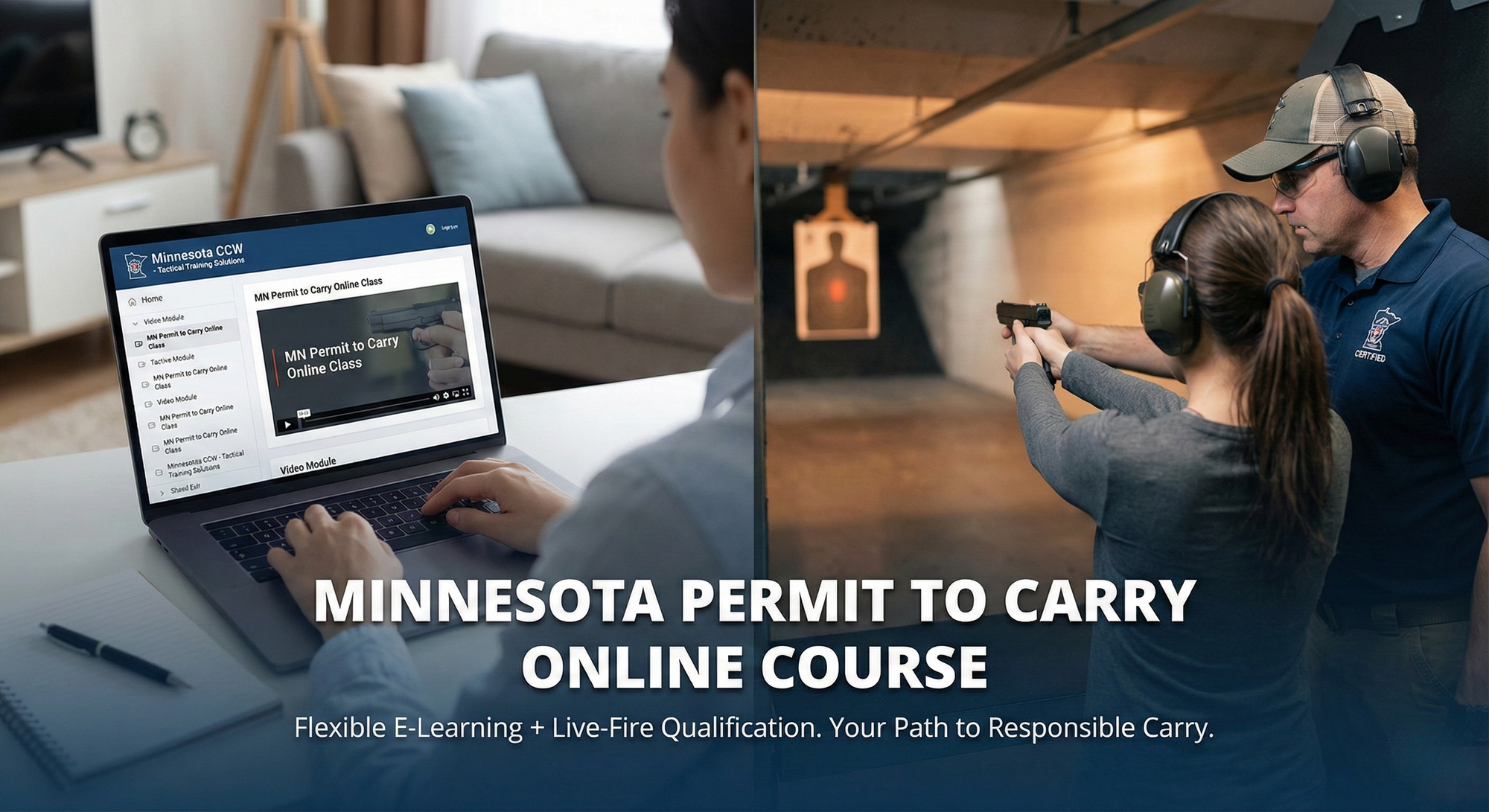
Online gun safety courses are appealing for a simple reason: they let people start learning before they have to set aside an entire day, choose equipment, or walk into an unfamiliar range. That can be a sensible first step. A well-designed online course gives a new or returning student time to absorb safety concepts, understand the purpose of the training, and arrive with better questions.
It is not the same as every kind of firearms instruction. Online learning is strongest when it explains the rules, context, and decision points that a student can study at a measured pace. Hands-on supervision, range procedures, and a required live-fire exercise belong in person. The right course is honest about that split, clear about its next step, and focused on helping a student learn responsibly rather than rushing them toward a certificate.
Start with the outcome you need
Before comparing courses, decide what you are trying to accomplish. Someone who wants a general introduction to safety may need a different path than a Minnesota resident preparing for a Permit to Carry application. Someone who already owns a pistol but wants a structured refresher may need different support again. A course title alone does not answer those questions.
For a Minnesota Permit to Carry, qualifying training has a specific legal role. Minnesota'sPermit to Carry statute requires training in the safe use of a pistol, including an actual shooting qualification exercise. That means an online course can cover the classroom portion, but it should plainly explain how and where the required in-person portion is completed.
A training provider should make the complete path understandable before you buy. Look for a direct answer to four questions: what the online material covers, what must happen in person, what documentation is provided after all requirements are completed, and how students can get a course-specific question answered. If the answers are vague, do not assume the course fits a permit application just because it mentions safety.
What a useful online course can teach
The best online safety courses do not pretend that watching a screen creates physical skill. They use the format for what it does well: giving a student a calm, repeatable foundation. Lessons can introduce the responsibility that comes with firearm ownership, explain why range rules exist, cover the legal questions that shape a permit decision, and prepare a student for the conversations to have with a qualified instructor.
For a Minnesota permit path, classroom material should put safety and lawful decision-making ahead of gear talk. It should help a student understand that training, a county application, and a state-issued permit are separate steps. The state's Permit to Carry information is a useful official starting point for the application process, while the sheriff who accepts an application remains the final source for local filing details.
Online learning also gives students time to pause and take notes. Instead of trying to remember every term from a single long class, a student can review a lesson, write down a question, and bring that question to the in-person portion. That is particularly useful for people who are new to formal training, returning after a long break, or balancing training with work and family commitments.
A thoughtful online course should also make it easy to tell the difference between a general explanation and a personal answer. A video can explain a statewide rule or a provider's normal process. It cannot determine whether a particular person may possess a firearm, whether an old court matter changes an application, or whether a local sheriff has a current intake rule that applies to one appointment. Good material points students toward the official source or a qualified professional when the question becomes personal.
Look at the pace as well as the subject list. A course with short, organized lessons gives a student room to review a difficult topic instead of treating completion speed as the goal. It should explain what happens after each major portion, make the range step feel expected rather than hidden, and avoid promising confidence or legal certainty that a screen alone cannot provide. Those are signs of a provider that takes safety and student preparation seriously.
Tactical Training Solutions uses that sequence for its online Minnesota Permit to Carry course: students complete the classroom portion at their pace, then finish the required local review and range qualification. The course path is designed to give students time for the material without presenting the online portion as a substitute for supervised range work.
What still belongs in person
A screen cannot see whether someone has understood a range command, needs clarification before handling equipment, or should pause and ask for help. Those are the moments when an instructor and a controlled environment matter. A responsible course separates the classroom information from the live portion instead of blurring the two together.
In Minnesota, the live-fire qualification is not an optional add-on for a new Permit to Carry applicant. It is part of the training standard. The instructor explains the course procedures, observes the required exercise, and confirms whether the student has completed the course requirements. The Minnesota shooting qualification guide explains what students should confirm before a range day and why the exercise should be treated as supervised learning, not a performance.
That distinction protects students from a common bad assumption: completing an online module does not itself make someone ready to carry or authorize them to skip the range portion. The training certificate, county application, and permit decision each have their own place. A careful provider keeps those steps visible so students can plan without guesswork.

Use the course to prepare better questions
A beginner does not need to arrive with perfect vocabulary or a fully formed equipment plan. They do need a way to recognize when a question matters. Online material can give that context before a student is standing in a classroom or range environment for the first time. It can help them ask what the session will cover, what protective equipment is required, how a loaner arrangement works, and what they should do when they do not understand a direction.
That is more valuable than trying to memorize a long list of rules. Responsible training depends on a student being willing to slow down and ask for clarification. A course should reinforce that habit. It should make clear that there is no benefit to guessing about a provider's process, a range command, or a legal requirement when a qualified instructor or official source can provide the right answer.
Before an in-person session, write down the questions that affect your plan. Confirm whether the course has a current service notice, whether any documents must be brought to the local session, and whether you need to make an advance arrangement for equipment. Small questions handled early prevent a student from arriving distracted or unprepared, which is exactly what a safety-first course should help avoid.
Questions to ask before you enroll
The right questions make it easier to spot a course that respects both the student and the subject. Start with the instructor. Look for clear credentials, a visible contact path, and a course description that says what is included without overselling outcomes. Tactical Training Solutions shares its instructor background on the instructor credentials page, which is the kind of information a student should be able to find before choosing any provider.
Then ask about the complete experience. Is the online material available at a manageable pace? Does the provider explain what equipment, identification, or paperwork may be needed later? Are there clear instructions for arranging the local range step? Can a student ask about a loaner, accessibility concern, or lack of prior experience before arriving? These questions are practical signs that the course has been designed for real people, not just a checkout page.
It is also worth checking what “online” actually means. Some programs provide only a general video library. Others pair online coursework with a scheduled instructor review, supervised live-fire session, and clear documentation after the whole training path is complete. Neither description is automatically good or bad, but they are different products. A student should know which one they are choosing before assuming it fits a Minnesota permit application.
Be cautious with claims that sound too easy. A responsible provider will not suggest that passing a quick online quiz is the same as completing required hands-on training. It will not tell a student to carry based on course enrollment or a classroom certificate alone. And it will make room for a student to slow down, ask a question, or postpone a range visit when something does not feel clear. Training should reduce uncertainty, not create pressure to move faster than good judgment allows.
Finally, ask what the course does not cover. A provider should not imply that one class solves every future safety or legal question. Permit holders still need to follow changing laws, private-property rules, and the direction of qualified professionals when a personal legal issue is involved. The Minnesota concealed-carry laws guide is a useful next reference once you understand the training path.
Plan the Minnesota permit path in the right order
A straightforward plan reduces last-minute problems. Begin with the classroom material. Use it to understand the requirements and gather questions. Next, complete the provider's local in-person requirements, including the required live-fire exercise. After qualifying training is complete, keep the documentation organized and use current instructions from the sheriff's office that will receive your application.
The training date matters. Minnesota requires qualifying training to be completed within one year before a new Permit to Carry application. The Minnesota Permit to Carry requirements checklist explains the timing and application basics, while the application guide walks through what to prepare for the sheriff's office. Reading those two guides before you schedule helps keep training, paperwork, and county filing in the right sequence.
Tactical Training Solutions currently has shooting qualifications temporarily suspended until November because of a family emergency. Students can still use the online material to understand the process, but should check the current qualification notice before making a range appointment or travel plan.
When qualifications resume, treat the online portion as preparation for a conversation, not a finish line. Bring forward the questions you wrote down, confirm any equipment arrangements before traveling, and follow the instructor's directions at the in-person session. That measured sequence gives a student time to learn the material, complete the required training responsibly, and move into the county application process without confusing one step for another.

Frequently asked questions
Can an online gun safety course teach a beginner?
An online course can provide a useful foundation in safety concepts, legal context, terminology, and the questions to ask before training. It cannot replace the instructor-led, hands-on supervision a new shooter may need before handling a firearm or attending a live-fire exercise.
Can I complete a Minnesota Permit to Carry course entirely online?
No. Minnesota qualifying training includes an actual shooting qualification exercise. An online classroom can cover the coursework, but a student still needs to complete the required in-person review and live-fire portion before receiving qualifying training documentation.
What should I ask before I buy an online gun safety course?
Ask who teaches the course, what it covers, whether the content applies to your goal, how questions are handled, and whether a live range or qualification step is required. For a Minnesota Permit to Carry, also confirm that the complete training path will provide the current documentation required for an application.
Do I need to own a firearm before taking an online course?
Not necessarily. A course may help you understand the process and make better questions for an instructor before you decide what equipment is appropriate. Confirm any range, loaner, ammunition, and safety-gear arrangements directly with the training provider before making plans.
What comes after an online Minnesota Permit to Carry class?
After the classroom portion, students complete the required local review and live-fire qualification, receive the qualifying documentation when they have completed the course requirements, and then follow the county sheriff's current application instructions.
Related posts
Do You Need a Permit to Buy a Shotgun in Minnesota?
An easy way to sort out Minnesota Permit to Purchase questions before buying a shotgun from a dealer or planning a private transfer.
Read Article
Minnesota Gun Laws for Nonresidents: Carry and Travel
A practical guide for out-of-state visitors to Minnesota: permit recognition, applying for a Minnesota permit, purchasing questions, and travel planning.
Read Article
Minnesota Permit to Carry Address Change: What to Do
Moved? Learn who to notify, the 30-day deadline, when a replacement Minnesota Permit to Carry card can help, and what to verify before renewing.
Read ArticleThis article provides general information about online gun safety and Minnesota Permit to Carry training as of September 22, 2026. Course details, sheriff procedures, and laws can change. Verify current requirements with official sources before applying, and seek qualified legal advice for an individual legal question.