
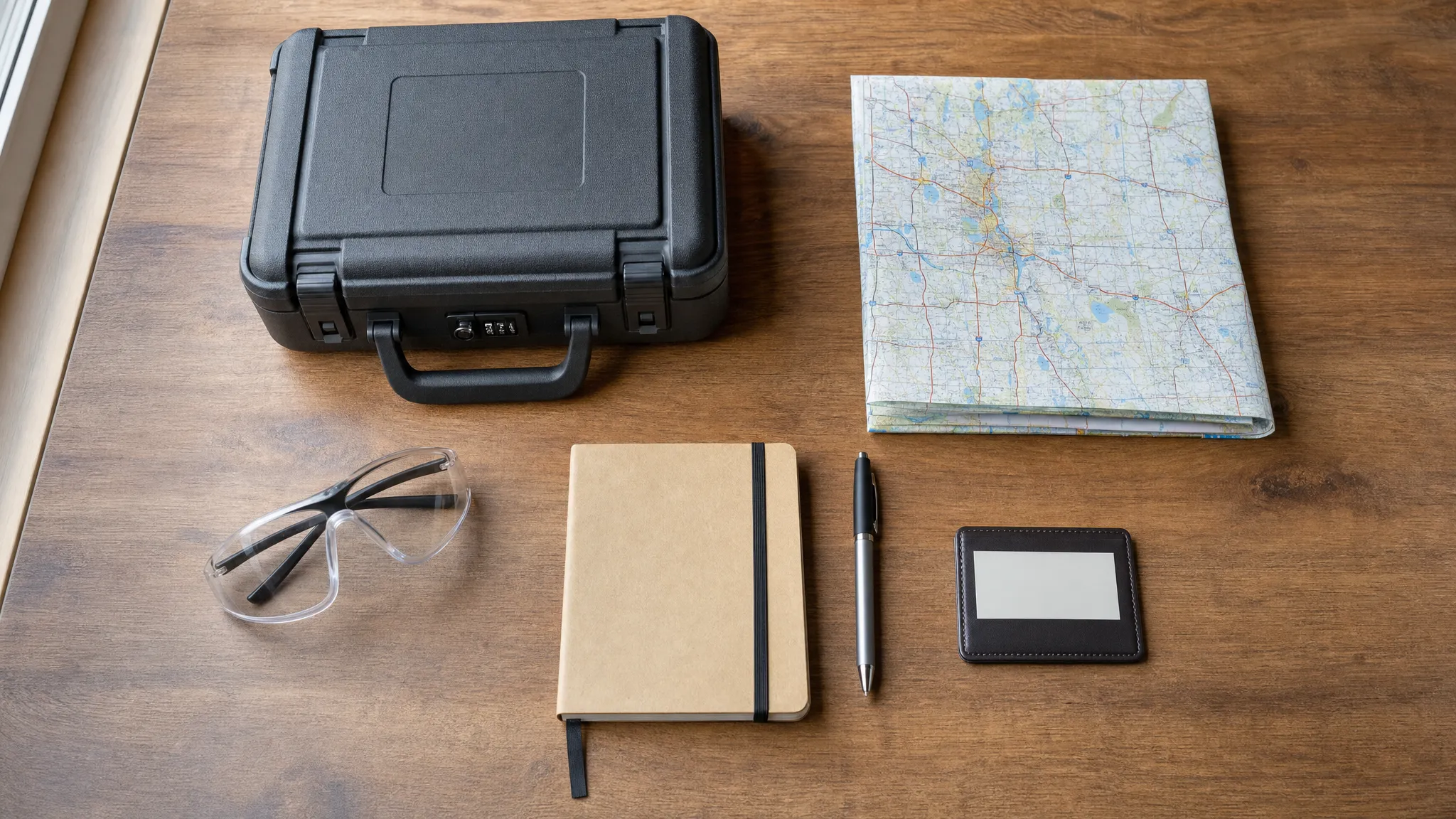
Minnesota Statute 624.714 is the state's main Permit to Carry law. It is the source people often land on when they are trying to understand whether they need a permit, where to apply, what training counts, or what changes once a permit is in hand. The statute is essential, but it is written for the legal system, not as a first-time applicant's checklist.
This guide translates the practical parts into a clear order of decisions. It is general information, not legal advice. Start with the current text of Minnesota Statute 624.714 and the Minnesota Department of Public Safety's Permit to Carry guidance whenever you need the current statewide rule or official application material.
What Minnesota Statute 624.714 covers
At its core, section 624.714 covers public pistol carry in Minnesota. It addresses the permit requirement, the application process, training, permit length, what documents a permit holder must have while carrying, private-establishment notice, and recognition of certain out-of-state permits. It also contains exceptions and details that can matter a great deal in a particular situation.
The useful way to read it is in layers. First, decide what you are trying to do. A new applicant needs the application and training rules. A current permit holder needs to know the carrying, identification, destination, renewal, or travel rules that apply to a real plan. A person buying a firearm may need a different process altogether. One statute reaches several situations, so one short answer rarely covers every reader's question.
One Permit to Carry, whether a pistol is concealed or visible
Minnesota uses a Permit to Carry for public pistol carry. It is not one permit for concealed carry and another for open carry. A person who is legally carrying under the permit rules does not need to solve a separate credential question just because the pistol may be concealed or visible. The place, the person's eligibility, and the circumstances still matter.
That distinction prevents a common detour. If your question is whether a Permit to Carry is required for public carry, begin with this statute guide and the site's Minnesota concealed-carry laws guide. If the question is specifically about visible carry, use the Minnesota open-carry guide. Both topics build from the same statewide Permit to Carry rule, then add the practical considerations that a short legal label leaves out.
For a new permit, put training before the sheriff visit
A first-time application requires qualifying training in the safe use of a pistol. The statute calls for a training certificate completed within one year before the application, and the training includes a live-fire shooting exercise. The certificate is not just a reminder that a class was taken. It is part of the application packet, so timing and recordkeeping matter.
Begin by reading the Minnesota Permit to Carry requirements checklist, then follow the step-by-step application guide when you are ready to assemble the packet. Those guides cover the normal sequence in more detail: complete current training, prepare the official form and identification, verify county instructions, submit in person, and keep the receipt.
The official Minnesota Permit to Carry application should be the version you use. Do not assume an old saved form, a form from another county, or a search-result attachment is still the right paperwork. Check the sheriff's own page before leaving home for appointment, payment, identification, and copy requirements.
Know what happens after the application is submitted
Minnesota residents apply to the sheriff in the county where they live. Nonresidents may apply to any Minnesota county sheriff. The statutory framework gives the sheriff up to 30 days after receiving a complete application to issue or deny the permit. Keep the signed receipt from the sheriff because it records that the office accepted the packet and when the process began.
A complete packet makes this stage calmer. Put the official application, current training certificate, identification, requested copies, payment details, and appointment confirmation in one folder. Then check the county's instructions again the day before your visit. A small local detail, such as a payment method or scheduling requirement, is often more likely to delay an ordinary application than the statewide rule itself.
Tactical Training Solutions gives students a practical path through the training portion: complete the online Permit to Carry classroom on your own schedule, then use the qualification scheduler to complete the local in-person review and live-fire step in Burnsville. That leaves you with current training and a clearer sequence before the county filing.
After issuance, keep the permit card and ID with you
The statute does not treat a Permit to Carry as a card that can stay at home. A permit holder carrying a pistol in public must have the permit card and a driver's license, state ID, or other government-issued photo identification in immediate possession. The permit and identification must be displayed upon lawful demand by a peace officer.
Make this a routine before leaving home. Check the permit expiration date, confirm the physical card and identification are with you, and do not substitute a photo on a phone or a document left in a vehicle. A simple wallet-and-keys check is less stressful than trying to sort out a missing document in the middle of an encounter.
A permit is generally valid for five years. When yours is approaching expiration, move to theMinnesota Permit to Carry renewal guide rather than repeating the first-application process. It explains the renewal window, current training requirement, and the practical difference between renewing on time and letting a permit expire.
A permit does not make every destination the same
The Permit to Carry rule is only the first location check. Minnesota law has restrictions for certain places, and a workplace, event, school, government building, health-care setting, or private business can introduce an additional rule or security process. A responsible plan asks about the actual destination before a person gets to a door, checkpoint, or parking lot.
Private establishments can give notice that firearms are not allowed, and the statute addresses what happens when an owner or authorized person personally asks someone to leave. The practical answer is straightforward: leave calmly. A permit does not turn a property rule into an argument, and trying to solve a legal disagreement at the entrance is poor planning for everyone involved.
For a normal errand, check the destination's policy, decide how a firearm would be secured if carrying there is not permitted, and reconsider the route if leaving it in a vehicle creates a theft or handling risk. The site's Permit and range resources are a useful starting point for official references, but a specific legal question needs a source that can answer the facts of that situation.
Travel adds another layer
Section 624.714 also addresses recognition of some out-of-state permits. That does not mean a Minnesota permit automatically works everywhere else. Each state sets its own recognition, carry, transport, and prohibited-location rules. A route can include states with different rules before you ever reach the actual destination.
Use the Minnesota Department of Public Safety reciprocity information to understand Minnesota's current recognition decisions, then check the official source for every state on your own route. The site's pre-trip reciprocity checklisthelps organize the travel questions, including overnight stops, vehicle storage, destination policies, and the exact permit a person holds.
Use training to understand the rule, not just collect a certificate
A statute can tell you the legal baseline. It cannot build the safety habits needed for a normal day, such as handling a pistol safely, planning for a restricted destination, recognizing when a situation is changing, or knowing when to stop and get a qualified answer. That is why the training portion matters beyond the application packet.
TTS combines self-paced online classroom work with an in-person review and qualification in Burnsville, giving students time to understand the material before the range step. The instructor credentials page explains the experience behind that instruction. For a course or qualification question, use the contact page. For individual eligibility, legal, or location questions, use the sheriff or a qualified Minnesota attorney instead.
Start the online permit courseFrequently Asked Questions
What is Minnesota Statute 624.714?
Minnesota Statute 624.714 is the state's main Permit to Carry law. It covers the permit requirement for public pistol carry, the application process, qualifying training, permit duration, carrying identification, private-property notice, reciprocity, and several related rules.
Do I need a separate Minnesota permit for concealed carry?
Minnesota uses one Permit to Carry for public pistol carry. It is not a separate concealed-carry credential and open-carry credential. The same permit is relevant whether a person carries a pistol openly or concealed, subject to the law's exceptions and location rules.
Where do Minnesota residents apply for a Permit to Carry?
Minnesota residents apply in person to the sheriff in the county where they live. A nonresident may apply to any Minnesota county sheriff. Check the receiving sheriff's current instructions before going because appointment, payment, and document requirements can vary.
How long does a Minnesota Permit to Carry last?
A Minnesota Permit to Carry is generally valid for five years from the date of issue. Renewal is a separate process, and qualifying training still needs to be current when a person applies to renew.
What should I do if I have a personal question about eligibility or carrying?
Do not rely on a general guide to answer a question involving personal history, a court order, a possible possession restriction, or a specific location. Confirm process questions with the sheriff and seek advice from a qualified Minnesota attorney when the legal answer depends on your individual circumstances.
Related posts
Do You Need a Permit to Buy a Shotgun in Minnesota?
An easy way to sort out Minnesota Permit to Purchase questions before buying a shotgun from a dealer or planning a private transfer.
Read Article
Minnesota Gun Laws for Nonresidents: Carry and Travel
A practical guide for out-of-state visitors to Minnesota: permit recognition, applying for a Minnesota permit, purchasing questions, and travel planning.
Read Article
Minnesota Permit to Carry Address Change: What to Do
Moved? Learn who to notify, the 30-day deadline, when a replacement Minnesota Permit to Carry card can help, and what to verify before renewing.
Read ArticleThis article provides general information about Minnesota Statute 624.714 as of September 8, 2026. Laws and local procedures can change. Verify current requirements with official sources before carrying or applying, and seek qualified legal advice for an individual legal question.