Advanced Pistol Training
Build cleaner mechanics, stronger standards, and more useful range skills after the fundamentals are in place.
Train the skills that make practice matter.
A permit course establishes an important foundation. Advanced pistol training gives committed shooters a place to sharpen how they present, grip, aim, manage recoil, reload, and make decisions under more demanding conditions.
Tactical Training Solutions approaches pistolcraft as a progression. Instead of treating speed as the whole point, the work starts with repeatable mechanics and builds toward efficiency without abandoning accuracy, safe gun handling, or judgment. That makes the training useful for shooters who have taken a basic course, spend time at the range, and want a clearer standard for their next stage of practice.
The goal is not to perform for an instructor or collect a class title. It is to leave with specific skills to practice, a clearer picture of what is holding you back, and a more disciplined way to work on your handgun handling between courses.
What advanced pistol work focuses on.
Progress comes from identifying the right skill, applying a clear standard, and practicing it with purpose.
Build reliable pistol mechanics
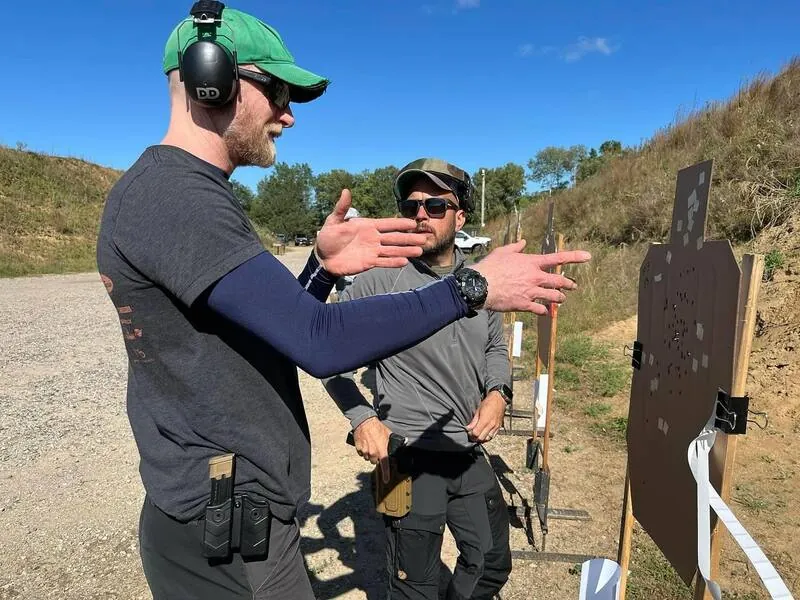
Strong shooting starts before the shot breaks. Advanced pistolcraft develops the details that make a handgun predictable in your hands: stance that supports movement, a deliberate grip, visual focus, trigger control, and recoil management. These are not isolated drills. They work together to help you return the pistol to the target efficiently and keep your shots accountable as pace increases.
Students learn to notice the small errors that can keep practice from producing better results. A rushed presentation, inconsistent grip pressure, a wandering visual focus, or an uncontrolled trigger press can each limit accuracy. Working through those mechanics with an instructor gives you a more useful diagnosis than simply sending more rounds downrange.
Build habits that hold together when the drill becomes more demanding, not just when the pace is comfortable.
Balance speed and precision
Faster shooting is useful only when the hits still meet the standard. Advanced classes help students work through that balance with practical drills that connect sight picture, acceptable accuracy, recoil recovery, and time. You learn when to press for more speed, when to slow down, and how to recognize the difference instead of guessing.
This approach is especially valuable for shooters who have plateaued at the range. More casual practice can reinforce the same routine without revealing why it has stopped working. Structured reps create a clearer feedback loop, so every drill gives you something concrete to refine rather than a vague sense that you should be better by now.
Develop speed that stays connected to sight confirmation, trigger control, and the target standard.
Handle the pistol with more confidence
Efficient reloads, malfunction clearing, drawing from a holster, and one-handed shooting all depend on sound fundamentals. Advanced training gives those skills a structured place to develop. The emphasis remains on control, safe handling, and a repeatable process, so students do not confuse hurried movement with real competence.
Depending on the class, students may also work from concealment, around cover, while moving, or through practical stages that require them to manage more than one task at a time. Each added layer should build on skills you can already perform safely. That is why choosing an appropriate course level matters as much as choosing a course title.
Use practical drills to see what is solid, what needs work, and where to focus your next practice session.
Choose the level that matches your experience.
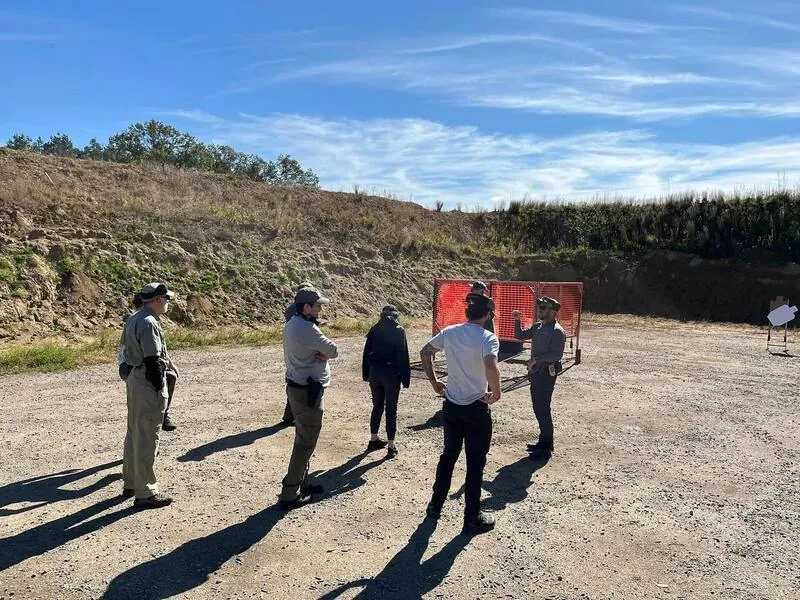
Advanced training is most useful when it meets you where you are. Tactical Training Solutions offers a progression that starts with foundational performance pistol work and can move into more demanding mechanics, movement, transitions, and concealed-carry skills.
Progressive Pistolcraft courses focus on the mechanics that make deliberate practice more productive. Later classes build from that base rather than skipping it. Students who have a solid foundation can explore more complex problems, while students who need to reinforce fundamentals can spend their time where it will make the biggest difference.
Before committing to a class, consider your recent range time, your comfort working from a holster, the gear you own, and the kind of practice you want to improve. A short conversation with TTS can help identify the right entry point and prevent you from registering for a course that is either too basic or too large a jump.
Prepare for a productive training day.
Good preparation lets you spend the day focused on coaching, drills, and skill development.
Confirm your fit before you register
Advanced classes are intended for shooters who are ready to work beyond a basic introduction. Contact TTS with questions about experience, prerequisites, current dates, or course focus. A direct answer before registration is better than showing up unsure whether the course, gear, or pace is right for you.
If you are new to handguns or still need the Minnesota Permit to Carry foundation, start with the online permit course and local qualification. That path covers safe handling, relevant legal responsibilities, and the hands-on qualification step before you move into higher-level performance work.
Advanced courses commonly require a reliable 9mm or larger handgun, magazines, a practical holster, magazine pouch, eye and ear protection, and ammunition. Confirm the current class requirements before registering.
Know the course details in advance
Course dates, locations, round counts, and registration details can vary. Reaching out before you commit gives you a chance to confirm the practical information that matters: what the class covers, the gear list, any prerequisites, and how to prepare for the day. That simple step helps ensure your training time is spent building skills instead of sorting out avoidable surprises.
Email Tactical Training Solutions for the current schedule and registration information.
Carry the work into your own practice
The value of an advanced class continues after the range day. Use the feedback from each drill to build a simple practice plan: choose one skill, set a clear standard, work deliberately, and keep track of what changes. Small, consistent sessions are more useful than chasing a new drill every week without understanding what it is meant to improve.
That mindset helps students make better use of future training as well. When you know what you are working on, the next class becomes a chance to test progress, refine a stubborn problem, and add the next layer of skill with purpose.
Good training gives you a specific next practice focus, not just a full day of shooting to remember.
Answers before you train.
Who is advanced pistol training for?
Do I need a Permit to Carry before taking an advanced class?
What equipment should I expect to bring?
Are advanced classes scheduled year-round?
Ready to start?
Start the classroom portion online, then contact TTS to finish your qualification locally.